Abdolhossein Noushin | Pioneer of Modern Iranian Theatre
Remembering Artists
Abdolhossein Noushin | Life, Work and Legacy in Modern Iranian Theatre
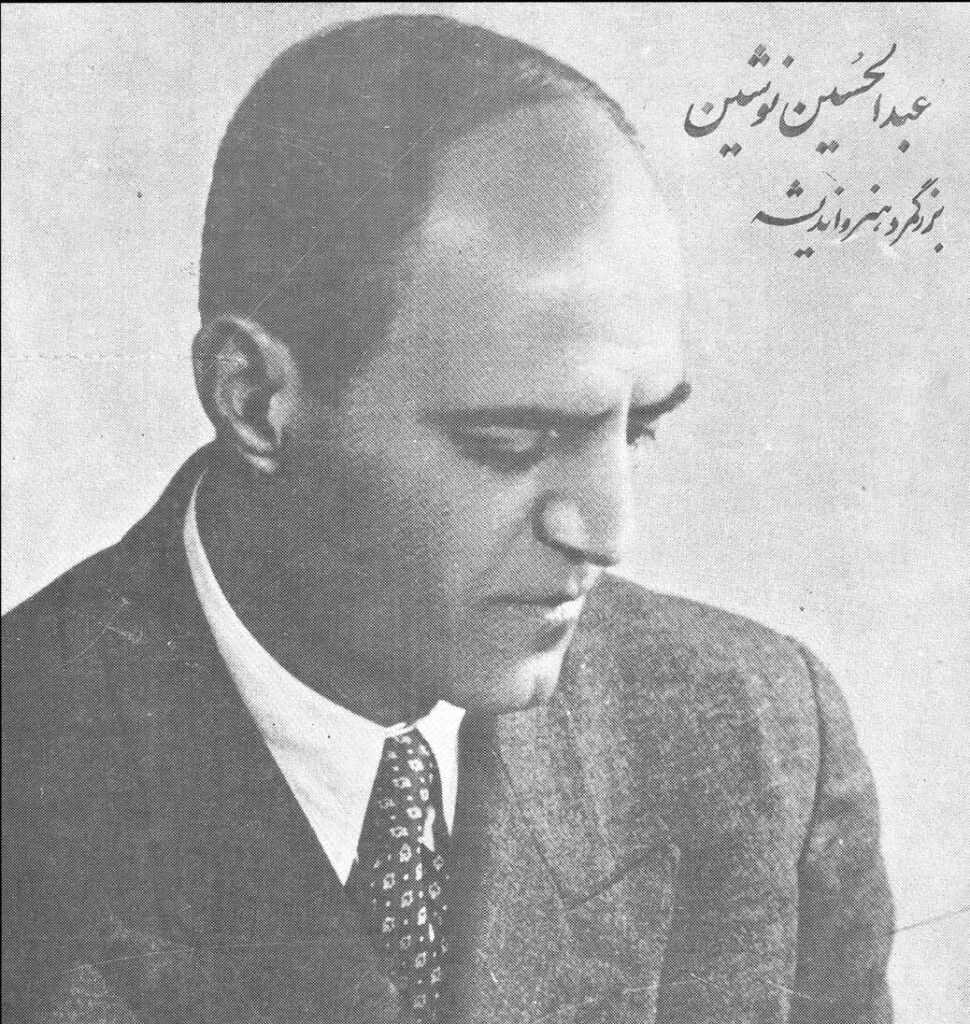
Abdolhossein Noushin (1906–1971) was a pioneering figure in modern Iranian theatre. A director, actor, translator, and scholar, he helped transform professional theatre in Iran through systematic acting education, disciplined rehearsals, and a commitment to connecting the performing arts with Persian culture and literature.
Abdolhossein Noushin is one of the influential figures in the history of modern Iranian theatre; an artist whose name is closely associated with the emergence of modern theatre, systematic acting education, professional directing, and efforts to connect the performing arts with Iranian culture and literature. He was among those who sought to take theatre beyond the mere performance of plays and transform it into an art grounded in knowledge, research, rehearsal, discipline, and a deep understanding of human nature.
Noushin was more than a director or playwright. He was also a translator, researcher, and educator who approached theatre with a fresh perspective and left a lasting influence on subsequent generations of Iranian theatre artists.
From Mashhad to the Theatrical Stages of France
Abdolhossein Noushin was born in Mashhad in 1906. After completing his secondary education, he travelled to Europe to continue his studies. There, contrary to the path initially planned for him, his passion for theatre began to shape the decisions he made about his life.
In Toulouse, France, he studied theatre and became familiar with modern approaches to theatrical education, acting, and directing. This decision was not an easy one, and he faced financial and academic difficulties along the way. Yet his commitment to the performing arts was so strong that he refused to abandon it. After returning to Iran and working in theatre, he travelled to France once again to continue his artistic journey.
These experiences enabled him to return to Iran with a broader understanding of European theatre and contribute to the development of a new approach to the performing arts.
Introducing Discipline and Modern Methods to Iranian Theatre
At a time when Iranian theatre was transitioning from traditional forms of performance to modern approaches, Noushin emphasized the importance of regular rehearsals, script analysis, character development, ensemble coordination, and professional discipline.
In his view, a successful performance did not depend solely on an actor’s individual talent. Rather, it was the result of teamwork, education, planning, and careful preparation for the stage. He sought to move actors away from superficial and merely theatrical performances, guiding them toward a deeper understanding of their characters and a more precise expression of their emotions and thoughts.
Alongside the activities of other pioneering artists and theatre companies, this approach contributed to the transformation of contemporary Iranian theatre and established new standards for directing and acting.
Ferdowsi Theatre: A Step Toward Professional Theatre
One of the most important chapters in Noushin’s artistic career was the establishment and management of theatre companies and venues, particularly Ferdowsi Theatre. Through these activities, he sought to stage productions based on professional directing principles and high performance standards, offering Iranian audiences a different theatrical experience.
By selecting and staging both Iranian and foreign plays, Noushin helped broaden the range of theatrical experiences available in Iran. He placed great importance on the quality of the script, performance techniques, coordination among actors, and the relationship between the different elements of a production. He believed that theatre could only progress through a cohesive ensemble of well-trained artists.
Alongside his work in theatrical production, he also devoted attention to training actors and nurturing a generation of artists, many of whom would play important roles in shaping professional theatre in Iran.
Loreta: A Partner in Life and Art
Any examination of Abdolhossein Noushin’s artistic life would be incomplete without mentioning Loreta, the distinguished Iranian theatre actress and his wife. The two worked alongside each other during an important period in the history of Iranian theatre, and their names became associated with some of the stage’s enduring achievements.
Loreta was a talented and widely recognized actress of her time. Her presence in theatre, alongside Noushin’s activities, formed part of the history of the transformation of acting and professional theatrical performance in Iran.
The collaboration and companionship of these two artists can be seen as an example of the connection between life and art among the pioneers of modern Iranian theatre, artists who worked under difficult circumstances to advance the performing arts.
Noushin’s Love for Ferdowsi and Persian Literature
Another important aspect of Noushin’s character was his deep affection for the Persian language and literature. He believed that Iranian theatre could not develop an independent identity without an understanding of the country’s culture, history, and literary heritage.
A well-known statement attributed to him, “Without Iranian playwriting, a national theatre is inconceivable,” clearly reflects the importance of this perspective. For Noushin, national theatre did not simply mean using Iranian costumes, names, or stories. It required the development of dramatic writing rooted in the lives, ideas, experiences, and language of the Iranian people.
His interest in Ferdowsi’s Shahnameh is particularly significant in this context. Noushin conducted research into the Shahnameh, and his Glossary of the Shahnameh is among his scholarly works. He also contributed to the editing and examination of the Shahnameh text, and his name remains associated with research into this major work of Persian literature.
For Noushin, Persian literature was not merely a heritage to be admired. It was a living source for understanding Iranian people and a source of inspiration for artistic creation.
More Than a Director
Abdolhossein Noushin’s place in Iranian cultural history can be compared to the influence of pioneers who transformed other artistic disciplines. Just as Nima Yushij opened new paths in Persian poetry and Sadegh Hedayat introduced different approaches to fiction writing, Noushin helped establish a new perspective on performance, directing, and theatrical education in Iran.
His importance, however, was not limited to performance techniques. He was also concerned with how theatre could contribute to understanding society, examining human relationships, and raising serious questions about life.
From this perspective, the stage was not simply a place for telling a story. For Noushin, it was a space for reflection, learning, and confronting human realities.
A Legacy That Lives On
Abdolhossein Noushin passed away in 1971, but the influence of his work on the history of Iranian theatre continues to be recognized. His name remains associated with efforts to professionalize theatrical performance, the importance of acting education, the necessity of regular rehearsals, and the connection between theatre and Iranian culture and literature.
Perhaps one of his most important legacies is that he demonstrated to artists that talent alone is not enough for artistic creation. Art also requires knowledge, perseverance, discipline, responsibility, and respect for teamwork.
Whenever an actor takes time to understand a role, a director carefully analyzes a script, or a group of artists rehearses to achieve a coordinated performance, we can recognize the importance of the very principles that Noushin emphasized in his efforts to establish professional theatre in Iran.
Abdolhossein Noushin is remembered in the history of Iranian theatre not only for the productions he brought to the stage, but also for the path he opened for future generations, the perspective he brought to the performing arts, and his efforts to connect theatre with knowledge, culture, and Iranian identity.
His memory, as one of the pioneers of modern Iranian theatre, remains part of the country’s cultural and artistic heritage. He was an artist who believed that theatre was more than entertainment and could serve as a means of understanding humanity, society, and the world.
We honour the memory of Abdolhossein Noushin, an artist who brought a fresh perspective and a broader horizon to the Iranian theatrical stage.
RELATED TVT EPISODE
Explore the second episode of TVT, featuring a tribute to Abdolhossein Noushin and his influential role in the development of modern Iranian theatre.