Bahram Beyzaie: Life, Works and Artistic Legacy in Theatre and Cinema
Remembering Artists
Bahram Beyzaie: The Artist Whose Stages Still Live On
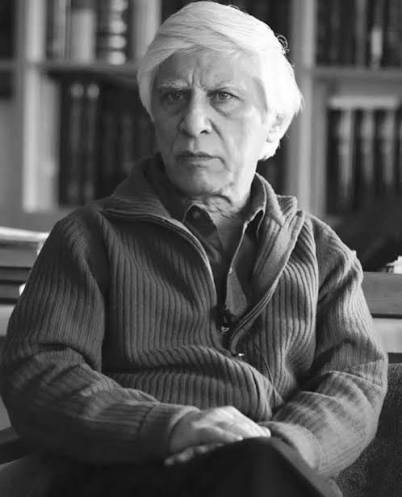
Bahram Beyzaie (December 26, 1938 – December 26, 2025) was one of the most influential figures in contemporary Iranian arts and culture. A playwright, theatre director, filmmaker, researcher and educator, he devoted more than six decades of his life to the study and creation of theatrical art. He passed away on his 87th birthday, but his works and ideas remain alive in Iran’s cultural memory.
Bahram Beyzaie is one of the influential figures in contemporary Iranian arts and culture; an artist whose name is closely associated with playwriting, theatre directing, research into the history of Iranian performance, cinema, and arts education. He devoted more than six decades of his life to studying, researching, and creating works in the performing arts, leaving behind a lasting legacy in each of these fields.
Beyzaie emerged from a generation that sought to rediscover the identity of Iranian theatre; a generation that aimed to expand the possibilities of theatrical art not only by looking to Western experiences, but also by returning to Iran’s cultural and performance traditions. He paid particular attention to traditions such as Ta’zieh, Naqqali, ritual performances, and ancient narratives, seeking to discover their inherent theatrical potential and bring it to life in new forms.
One of the defining characteristics of Bahram Beyzaie’s work is the connection between past and present. In his theatrical world, history is not merely an account of bygone times, but a mirror in which the issues and contradictions of contemporary society can be observed. The characters in his works often find themselves in situations where they must navigate between power and truth, destiny and choice, silence and protest, searching for a way to continue living.
From plays such as Pahlavan Akbar Dies and The Snake King to The Death of Yazdgerd and The Assembly of the Stabbing, one can trace his distinctive artistic world; a world rich in mythology, history, poetry, thought, and questions that do not yield easy answers. His distinctive language, unconventional narrative structures, and critical perspective on official accounts are among the qualities that distinguish his works from many others.
In the play The Death of Yazdgerd, a historical event becomes a setting for examining truth, power, and judgment. The characters’ differing accounts of a single incident confront the audience with a question: Is truth always clear and attainable, or is what we call truth sometimes shaped by power, circumstances, and individual interests? This very quality has allowed the work, despite the passage of time, to remain open to new readings, performances, and interpretations.
However, Bahram Beyzaie’s activities were not limited to playwriting and directing. He also made an important contribution to research into the history of Iranian performance. His book Theatre in Iran (Namayesh dar Iran) is one of his notable works in this field; a study that examines the history and various forms of performance in Iranian culture, drawing readers’ attention to traditions that have sometimes received less recognition in conventional accounts of theatre history.
Through this research, Beyzaie demonstrates that understanding Iranian theatre cannot rely solely on models introduced from other countries. Familiarity with Ta’zieh, Naqqali, ritual performances, and other forms of storytelling and performance is an essential part of understanding the history and theatrical identity of Iran. For this reason, his scholarly works hold particular importance for students, researchers, and theatre enthusiasts.
Among his plays, Four Boxes also occupies a notable place. Using symbolic language, the play explores issues such as identity, power, and social relationships, inviting audiences to reflect on the behaviour of individuals and society. The Eighth Voyage of Sinbad is another example of Beyzaie’s ability to draw upon legends and ancient narratives to address human concerns; stories that, in his works, do not remain confined to the past, but instead become a means of understanding the experiences of people today.
In the play The Thousand and First Night, storytelling, female characters, and their experiences also take on particular significance. The women in this work are not merely secondary characters on the margins of the story; rather, they play an active role in shaping the narrative and determining the course of events. Attention to different perspectives and the possibility of revisiting familiar stories from alternative viewpoints are among the important characteristics of Beyzaie’s intellectual and theatrical world.
Alongside theatre and research, cinema also forms an important part of his artistic career. Films such as Downpour, The Crow, The Stranger and the Fog, Bashu, the Little Stranger, Maybe Some Other Time, Travellers, and Killing Mad Dogs demonstrate the connection between his cinematic vision and his intellectual world.
In these films, as in his plays, individuals are confronted with complex situations, while the past, memory, identity, human relationships, and power structures play significant roles in shaping the stories. In cinema, too, Beyzaie sought a personal artistic language; one in which narrative, imagery, mythology, and social reality come together to create an experience that goes beyond simply telling a story.
One of the reasons Bahram Beyzaie’s works have endured is that they are not limited to the periods in which they were created. Many writings and films may attract attention during a particular era and gradually lose their significance, but Beyzaie’s works continue to invite renewed readings and interpretations. Each time audiences return to them, they may discover a new question or a different meaning, because the themes they explore—including truth, identity, power, historical memory, and human responsibility—remain part of our experience of life today.
Throughout his artistic journey, Beyzaie was always in pursuit of discovery: discovering the roots of Iranian performance, revisiting forgotten narratives, and finding new possibilities for artistic expression. He demonstrated that it is possible to return to the past without remaining trapped in it; to draw upon mythology and history without distancing oneself from contemporary concerns; and to use the language of art to raise questions that have no simple or definitive answers.
For this reason, generations of artists, students, and enthusiasts of arts and culture continue to return to his works. Beyzaie’s creations are not merely part of the history of Iranian theatre and cinema; they are also part of our contemporary cultural memory—a memory that can remain alive and continue to grow through every new performance, every renewed reading, and every different perspective.
In the Remembering Artists section, we honour Bahram Beyzaie for his many years of artistic creation, research, teaching, and intellectual exploration; an artist whose works influenced Iranian theatre and cinema, and whose questions remain before us.
May his memory be cherished, and may many others follow the artistic path he forged.
RELATED TVT EPISODE
Explore the first episode of TVT, featuring the Stratford Festival and a tribute to Bahram Beyzaie’s artistic legacy.