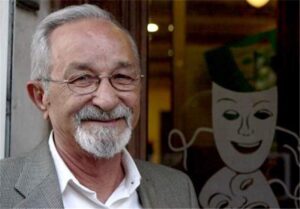
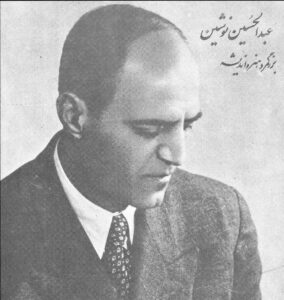
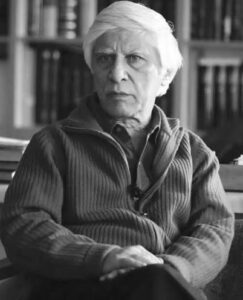
Hamid Samandarian | Pioneer of Modern Iranian Theatre
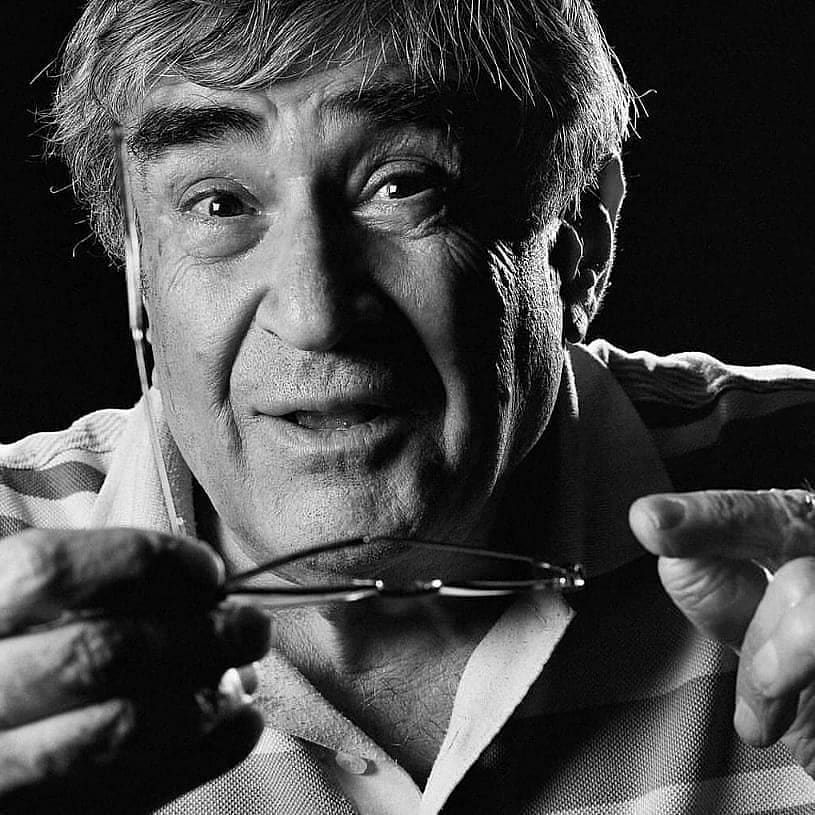
Remembering Artists
Hamid Samandarian | Life, Works and Artistic Legacy in Modern Iranian Theatre
Hamid Samandarian (1931–2012) was one of Iran’s most influential theatre directors and educators. Through his productions of major international plays, professional approach to directing, and lifelong dedication to teaching, he helped shape modern Iranian theatre and inspired generations of actors and directors.
In the history of contemporary Iranian theatre, there are names whose significance extends beyond their productions and performances, becoming closely associated with the emergence of new ways of thinking about the performing arts. The late Hamid Samandarian was one of the most distinguished of these figures. A director who not only brought memorable productions to the stage, he also played a fundamental role in the growth and development of professional theatre in Iran by educating and nurturing generations of actors, directors, and artists.
Hamid Samandarian was born in Tehran in 1931. His interest in the performing arts began during his teenage years, and after completing high school, he travelled to Germany to continue his education. He studied at the Hamburg Conservatory of Music and Performing Arts, where he decided to devote his life to theatre—a decision that would later lead to one of the most important chapters in the history of contemporary Iranian theatre.
After returning to Iran, Samandarian combined the knowledge and experience he had gained in Europe with an understanding of Iranian culture and society. He turned to the works of prominent playwrights from around the world, selecting plays that, from different perspectives, questioned humanity, society, power, morality, and individual responsibility.
Directing works by playwrights such as Henrik Ibsen, Jean-Paul Sartre, Bertolt Brecht, Arthur Miller, Tennessee Williams, and Friedrich Dürrenmatt earned him a distinguished place in Iranian theatre. His choices demonstrated that, in his view, theatre was not merely a means of entertainment, but a space for understanding humanity, confronting the realities of life, and reflecting on society’s fundamental questions.
Samandarian was, in many ways, a bridge between modern European theatre and the Iranian stage. By introducing and staging outstanding international works, he familiarized Iranian audiences with new approaches to storytelling, characterization, and directing. However, the importance of his work went beyond bringing European theatrical experiences to Iran; it also lay in his ability to establish a connection between universal ideas and the lived experiences of Iranian audiences.
One playwright whose work particularly interested Samandarian was the distinguished Swiss dramatist Friedrich Dürrenmatt. In plays such as The Visit and The Physicists, Dürrenmatt used dark humour and philosophical insight to challenge ideas about justice, power, morality, and human responsibility. His dramatic world continually questioned the boundaries between right and wrong, truth and expediency, and the individual and society. These concerns were not unfamiliar to Iranian audiences, and performances of such works offered viewers an opportunity to examine familiar issues in their own lives from a different perspective.
Henrik Ibsen, another important playwright in Samandarian’s artistic world, is known for characters who, in their search for truth, freedom, and individual responsibility, come into conflict with society and its dominant beliefs. Ibsen’s plays invite audiences to reflect on social relationships, moral judgments, and the position of individuals in the face of external pressures.
Alongside Ibsen, the works of Bertolt Brecht also held an important place in Samandarian’s career. Brecht, one of the founders of epic theatre, believed that audiences should not become entirely absorbed in the emotions and destinies of the characters on stage. Instead, they should be able to observe events from a critical distance and reflect on their causes and consequences. This approach clearly aligned with Samandarian’s view of theatre as an art form capable of stimulating thought and raising awareness.
Hamid Samandarian’s artistic career was filled with productions that have remained in the memory of Iranian theatre. Works such as The Caucasian Chalk Circle, The Glass Menagerie, The Marriage of Mr. Mississippi, Play Strindberg, Rhinoceros, Galileo, and Hell each represent part of his artistic journey—a journey in which the selection of texts, understanding of characters, attention to performance details, and guidance of actors held essential importance.
Yet perhaps one of the most enduring aspects of Samandarian’s legacy was shaped not on the stage, but in his classrooms and educational workshops. Many well-known figures in Iranian theatre and cinema benefited from his teaching and experience at some point in their professional lives. For Samandarian, acting education was not simply the transmission of techniques and methods. He wanted his students to understand the world more deeply and develop a greater awareness of humanity and the complexities of life.
In his view, an actor needed more than talent and stage presence to portray a role convincingly. Studying literature, understanding music, becoming familiar with other art forms, carefully observing human behaviour, and experiencing life in all its dimensions were essential to the development of a serious actor. Performers needed to understand their characters’ motivations, contradictions, fears, hopes, and desires so that what they presented on stage could come closer to real life.
For this reason, many of his students regarded Samandarian not merely as a theatre instructor, but as a teacher who showed them how to observe human beings more attentively. In his classes, discipline, study, rehearsal, responsibility, and respect for art were inseparable parts of education. He believed that professional theatre could not exist without knowledge, sustained effort, and artistic commitment.
Perhaps the secret of Hamid Samandarian’s enduring influence lies in this very perspective. His legacy is not limited to the plays he directed or the artists he trained. He helped establish a culture of respect for dramatic texts, seriousness in rehearsal, deep understanding of characters, and love for the performing arts—a culture whose influence can still be seen in the way many artists approach theatre and their professional responsibilities.
In theatre, the role of the audience has always been important. A performance becomes a living and meaningful experience when a deep connection develops between the stage and the auditorium. Yet achieving such a connection requires years of study, rehearsal, experience, and dedication from artists. It requires the efforts of individuals like Hamid Samandarian, who devoted their lives to improving the quality of theatrical productions, introducing audiences to world dramatic literature, and educating future generations.
Hamid Samandarian passed away in 2012, but his departure did not mark the end of his presence in Iranian theatre. Whenever the curtain rises on a performance, an actor appears on stage with sincerity and understanding, and an audience member leaves the theatre with new questions and ideas, we can recognize the importance of the legacy left by artists like him.
Hamid Samandarian’s name reminds us that theatre, before being merely a profession, is a way of understanding humanity and life—an art that teaches us to observe more carefully, think more deeply, and become more sensitive to the world around us.
May the memory of Master Hamid Samandarian be honoured; an artist who, through knowledge, perseverance, and love for theatre, helped shape an enduring part of Iran’s theatrical culture and opened a path whose continuation now rests with the generations that follow him.
May his name live forever in the history of Iranian theatre, and may many others follow the path he opened.
RELATED TVT EPISODE
In Episode 4 of TVT, we remember Hamid Samandarian, an influential Iranian theatre director, translator, and educator; reflect on the shared role of audiences and theatre practitioners in keeping theatre alive; and introduce The Blue Jay by Hamed Esmaeilion.