Gholamhossein Sa’edi | Life, Plays and Literary Legacy
Remembering Artists
Gholamhossein Sa'edi: The Storyteller of Those Whose Voices Went Unheard
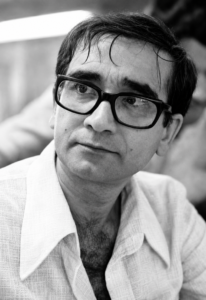
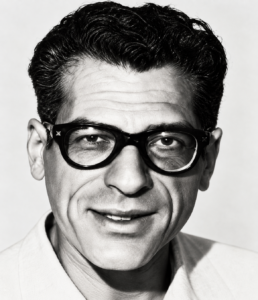
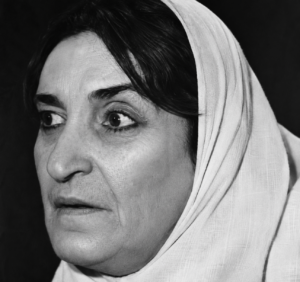
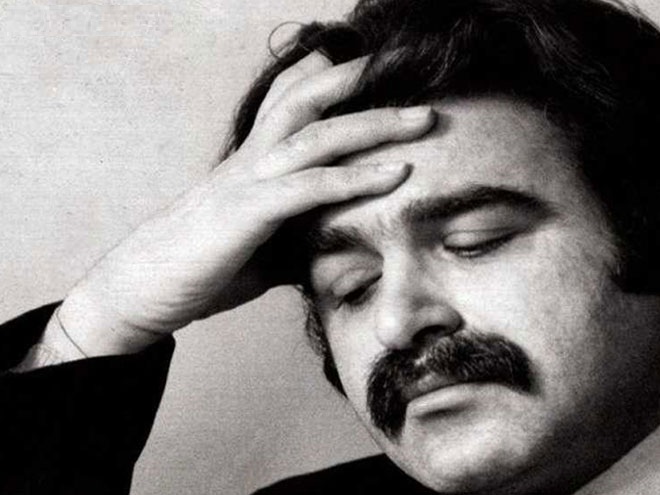
Gholamhossein Sa’edi (1936–1985) was one of Iran’s most influential modern playwrights, fiction writers, and screenwriters. Through works such as The Mourners of Bayal, The Stick-Wielders of Varazil, and Aye with a Hat, Aye without a Hat, he explored poverty, fear, social injustice, and the lives of marginalized people, leaving a lasting legacy across Iranian literature, theatre, and cinema.
Some writers tell stories, some create characters, and others portray the society in which they live—a society with all its wounds, fears, contradictions, and people whose voices are rarely heard. Gholamhossein Sa’edi belonged to this last group of writers. He succeeded in bringing aspects of Iranian social life into literature, theatre, and cinema, creating characters who remain alive and recognizable even after the passage of many years.
Gholamhossein Sa’edi was a physician, but the illnesses he encountered throughout his professional life were not merely physical. Alongside human suffering and bodily pain, he confronted fear, poverty, superstition, loneliness, violence, and social injustice. These experiences gradually entered his fictional world and became one of the defining characteristics of his work.
To understand Sa’edi, we must approach him through several paths: fiction, playwriting, and cinema. He was influential in all three fields and succeeded in establishing a profound connection between them.
Perhaps one of the most important aspects of Sa’edi’s artistic career was his playwriting. He wrote plays that were not intended merely to be read, but possessed considerable potential for theatrical performance. Among his well-known works in this field are The Stick-Wielders of Varazil, Aye with a Hat, Aye without a Hat, Woe to the Vanquished, Dictation and Angle, and The Fatteners.
Sa’edi was not simply a writer who completed a play and handed it over to a director. He was closely familiar with the theatrical world and maintained relationships and collaborations with a number of important Iranian theatre directors and actors. His plays came to life during rehearsals, and his characters became living, believable figures through their encounters with actors and the director’s artistic vision.
One of the most important figures involved in introducing and staging Sa’edi’s dramatic works was Jafar Vali. Vali was an influential Iranian theatre director who staged several of Sa’edi’s plays, including The Stick-Wielders of Varazil and Aye with a Hat, Aye without a Hat. Alongside him, artists such as Ali Nassirian, Ezzatollah Entezami, and Davoud Rashidi were also associated with theatrical productions and adaptations connected to Sa’edi’s works.
This close relationship with the theatrical world was particularly important because many of Sa’edi’s characters seemed to have been created for the stage from the very beginning. They were people trapped in difficult circumstances who gradually revealed their true selves under pressure. His characters were often ordinary individuals, but they found themselves in situations that exposed their hidden behaviours, fears, and weaknesses.
Alongside playwriting, short fiction also occupied a very important place in Sa’edi’s literary career. Collections such as The Mourners of Bayal, Fear and Trembling, and The Grave and the Cradle are examples of his distinctive fictional world—a world in which everyday life sometimes slowly transforms into a bitter nightmare.
In The Mourners of Bayal, we encounter a small village and people whose lives unfold amid poverty, death, fear, and superstition. In these works, Sa’edi is not merely reporting reality. He transforms reality into literature, creating memorable characters from the lives of ordinary people who remain in the reader’s mind.
In his works, the boundary between reality and nightmare sometimes becomes extremely thin. Events that initially appear ordinary gradually take on a terrifying quality. Yet this unsettling atmosphere is not created merely to inspire fear; behind it lie the social and psychological realities of society. Through his distinctive language and profound perspective, Sa’edi reveals fears and anxieties hidden beneath everyday life.
Another important aspect of Sa’edi’s artistic life was the connection between his works and Iranian cinema. Perhaps the first name that should be mentioned in this regard is Dariush Mehrjui.
The film The Cow is one of the most important examples of an adaptation from Sa’edi’s fictional world. Based on the story The Cow from the collection The Mourners of Bayal, the film became one of the landmark works in the history of Iranian cinema. The story of a villager who has a profound emotional attachment to his cow and gradually loses his identity and psychological balance after the animal’s death is a clear example of Sa’edi’s ability to create situations that are both deeply human and profoundly disturbing.
The collaboration between Sa’edi and Dariush Mehrjui did not end with The Cow. They later worked together on the film The Cycle, based on Sa’edi’s story The Garbage Dump. In this work, Sa’edi moves away from the rural setting and takes the audience into an urban environment—a harsh and bitter world in which poverty, power relationships, and the exploitation of human beings are portrayed.
The Cycle demonstrates that Sa’edi’s social perspective was not limited to a particular class or environment. Whether in a village or a city, among the poor or other social groups, he could identify situations in which individuals found themselves confronting unjust circumstances.*
But Dariush Mehrjui was not the only filmmaker who turned to Sa’edi’s works. Nasser Taqvai also made the film Tranquility in the Presence of Others, based on one of his stories. These collaborations demonstrate the strong visual and dramatic potential of Sa’edi’s writing. His characterization, atmosphere, dialogue, and dramatic situations were such that they could move from the pages of a book to the theatre stage and the cinema screen.
Nevertheless, Sa’edi cannot be understood solely through his plays and stories. He was a writer whose central concern was understanding humanity and society. He did not observe society from the outside; he lived among people, understood their lives, and felt their suffering.
He was a physician who understood human pain; a writer who knew how to transform that pain into words; a playwright who could bring it to the stage; and a screenwriter who allowed images to reveal to audiences what existed in his writing.
Sa’edi was also an active figure in Iran’s cultural and literary circles. He was among the founders of the Iranian Writers’ Association and participated in its cultural and social activities. His literary and social concerns were consistently reflected in both his writing and his public activities.
The final years of Sa’edi’s life were marked by separation from Iran and exile. He was forced to spend the last part of his life abroad and eventually passed away in Paris in 1985.
Yet the characters he created remained in Iran—in books, on theatre stages, and on cinema screens. Perhaps this is why Gholamhossein Sa’edi cannot be described as merely a writer. He is part of the history of Iranian literature, theatre, and cinema, an artist who succeeded in building a lasting bridge between these three fields.
Perhaps the reason Sa’edi’s works remain alive is that he wrote about people who did not belong to any particular period in history: people who are afraid, who have no power, who are trapped by poverty and superstition, and who sometimes, simply to survive, become part of the very circumstances that cause their suffering.
Sa’edi was the voice of people to whom few others listened. He observed their lives, understood their suffering, and gave them the opportunity to speak to audiences across generations through stories, plays, and films.
For me, too, Gholamhossein Sa’edi is not merely the name of a great writer in the history of Iranian literature and theatre. He represents a personal memory and a firsthand experience of being in his presence. I was fortunate enough, while working in Iran as Jafar Vali’s assistant on the production of The Stick-Wielders of Varazil, to become personally acquainted with Sa’edi during rehearsals and performances and to experience his presence in the theatrical environment.
This acquaintance was more than simply a memory of working with the author of a play. It was an opportunity to observe an artist whose writing was deeply connected to his life and concerns.
Years later, while living outside Iran, I returned once again to his works. I adapted several of Sa’edi’s plays into a combined theatrical production, which I titled The Marginalized, and brought it to the stage. This was my last theatrical production before the COVID-19 pandemic.
After that, at the height of the Woman, Life, Freedom movement, I staged a free adaptation of his play The Successor in Canada. Returning once again to Sa’edi’s world reminded me that his works are not confined to a particular time or place and can still connect with the issues and concerns of people today.
Perhaps this is one of the defining qualities of great artists: their works do not become outdated with the passage of time. Instead, they acquire new meanings in every era and engage new generations of audiences.
Gholamhossein Sa’edi spent the final years of his life far from Iran and passed away in exile, but his characters remained in their homeland—in books, in theatre halls, and on cinema screens.
He was the writer of people whose voices were rarely heard, people who might have received little attention in real life, but whose voices Sa’edi ensured would remain forever in our cultural memory.
We honour the memory of Gholamhossein Sa’edi, a writer who understood human suffering, transformed it into literature, and carried the voices of society’s unheard people to future generations.
We dedicate this programme to Gholamhossein Sa'edi and honour his name and memory.
RELATED TVT EPISODE
In the tenth episode of TVT, Tamashakhaneh explores the role of sponsorship in theatre and pays tribute to Gholamhossein Sa’edi, the influential playwright, fiction writer, and screenwriter whose work gave voice to marginalized communities and shaped Iranian theatre and cinema.