Parviz Fannizadeh | Life, Roles and Acting Legacy
Remembering Artists
Parviz Fannizadeh: The Little Giant of Iranian Acting
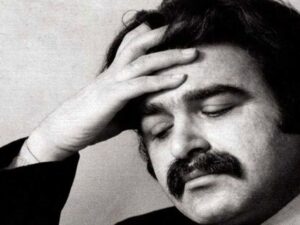
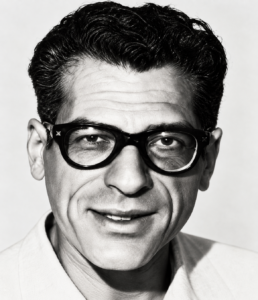
Parviz Fannizadeh (1937–1980) was an acclaimed Iranian theatre, film, and television actor celebrated for his versatility and remarkable ability to inhabit diverse characters. From Mash Ghasem in My Uncle Napoleon to Mr. Hekmati in Downpour, his performances left a lasting impression on Iranian audiences and the art of acting.
Sometimes, in the history of art, understanding an artist requires looking beyond the number of films and plays in which they appeared. Some actors go beyond the roles they perform and introduce an entirely new way of approaching acting. They not only bring dramatic characters to life but also leave behind new standards by which the art of acting can be understood.
Parviz Fannizadeh was one of these artists. Today, many people remember him as “Mash Ghasem,” but behind this beloved and enduring character lies a rich artistic career. Over approximately two decades of professional work, he appeared in dozens of theatrical productions and nearly twenty feature films, leaving behind outstanding examples of the art of acting.
Fannizadeh belonged to a generation that did not regard theatre merely as entertainment or a means of achieving fame. For that generation, theatre was a school—a school for understanding human beings, voice, body, silence, expression, and character. In such an environment, actors had to learn how to enter the inner world of a role and how to bring an entirely new human being to life on stage.
One of the most important figures in Fannizadeh’s development as an actor was Hamid Samandarian. For many actors of that generation, Samandarian was not simply a director but an influential teacher who transformed their understanding of acting and theatre.
Parviz Fannizadeh was among his important students and appeared in several of Samandarian’s stage productions, including Men Without Shadows and The Doctor in Spite of Himself. He also performed in The Glass Menagerie, translated by Hamid Samandarian and directed by Pari Saberi.
When speaking about Fannizadeh, Samandarian did not focus solely on his talent and ability. He believed that Fannizadeh possessed an exceptional gift for understanding and finding his way into a character. According to recollections attributed to Samandarian, when Fannizadeh was asked how he arrived at a particular interpretation of a role, he would reply, “If I knew, I’d tell you!”
At first glance, this response may seem simple, but it tells us something about an actor who apparently could not always explain how he reached a particular moment in a performance. Nevertheless, when he stepped onto the stage, something happened that audiences could clearly feel.
Jafar Vali also spoke about Fannizadeh’s distinctive and powerful presence during rehearsals and performances. According to Vali, Fannizadeh was one of those actors whose energy, once brought into a role, could transform the entire atmosphere of the stage.
Davoud Rashidi also recalled his earliest experiences working with Fannizadeh, saying that he quickly realized this artist was an actor by nature. Perhaps this is the most important point about Fannizadeh: he had not merely learned how to act; he possessed an innate talent and instinct for acting.
Nosrat Karimi also made an interesting observation about his acting style. In his view, Fannizadeh may not have had an academic or theoretical familiarity with Konstantin Stanislavski’s theories, but he instinctively approached that very style of acting. In other words, what is taught in acting classes as a theory and method seemed to happen naturally within him.
When Fannizadeh entered cinema, other dimensions of his acting abilities became apparent. One of his most important film roles was Mr. Hekmati in Bahram Beyzaie’s Downpour, a distinctive and remarkable performance for which he received the first prize for male acting at the Sepas Film Festival.
Mr. Hekmati in Downpour was an entirely different character from Mash Ghasem. He was a quiet, introverted, and sensitive man who revealed his loneliness and disappointments with subtlety and humanity as he confronted the world around him.
This contrast reveals one of Fannizadeh’s most important qualities: he did not repeat himself. There is almost no resemblance between Mr. Hekmati and Mash Ghasem—not in appearance, behaviour, or acting style. This means that the actor succeeded in separating the character from his own personality and creating an independent human being on screen.
Fannizadeh also appeared in several other important films, including Dariush Mehrjui’s The Cow, Amir Naderi’s Tangsir, and Masoud Kimiai’s The Deer.
Although his roles in Tangsir and The Deer were brief, their impact extended far beyond his screen time. In my opinion, these two performances should be screened and analyzed in acting classes, because they are outstanding examples of the fact that, in acting, there are no small or large roles. Rather, it is the actor who can transform a brief role into an unforgettable presence.
This is the very principle emphasized in many respected approaches to acting, including Stanislavski’s: the credibility and truth of a role do not depend on the size of the character or the length of time they appear.
Dariush Mehrjui also described Fannizadeh as an actor who performed with remarkable subtlety—someone who did not shout his emotions or resort to exaggeration and outward display in order to be noticed. This restraint and delicacy made his presence felt even in silence.
But Fannizadeh’s artistry was not limited to cinema. He also demonstrated different aspects of his abilities on television. One of his important television roles was the character Malijak in the series Soltan-e Sahebgharan.
Here, once again, we encounter an entirely different character. What could Mash Ghasem possibly have in common with Malijak? Interestingly, during the same period when audiences were coming to know Fannizadeh as Mash Ghasem, he was also portraying Malijak—two characters belonging to completely different worlds and requiring entirely different approaches to acting.
Hamid Samandarian offered a beautiful observation about his abilities: Fannizadeh had the talent to act theatrically in theatre and cinematically in cinema.
Perhaps this is one of the finest compliments that can be paid to a professional actor: that the performer not only understands the character but also recognizes the language and conventions of each medium and knows that acting on a theatre stage is different from acting in front of a film camera.
Parviz Fannizadeh’s theatrical career was equally remarkable. He appeared in numerous productions, including the following:
In the War Zone, The Tenant, François, The Fatteners, Woe to the Vanquished, The Servant of Two Masters, Hassan the Bald, Blessed Are the Patient, Men Without Shadows, The Glass Menagerie, The Exception and the Rule, The Story of a Miser, The Boastful Soldier, The Informer, Metamorphosis, One Hand Above Another, Jafar Khan Returns from Abroad, Where the Cross Is Made, Aye Without a Hat, Aye with a Hat, The Stick-Wielders of Varazil, The Post Office, A Scarecrow in the Night, The Santiago Express, The Travelers, Six Characters in Search of an Author, and The Wolves.
This list demonstrates that throughout his artistic career, Fannizadeh encountered a wide variety of plays and theatrical approaches, exploring different worlds of characterization and performance.
His film career also included works that are now considered important contributions to the history of Iranian cinema. Among them were:
Brick and Mirror, directed by Ebrahim Golestan in 1965; The Cow, directed by Dariush Mehrjui in 1969; Downpour, directed by Bahram Beyzaie in 1972; The Stranger, directed by Shapour Gharib in 1972; Tangsir, directed by Amir Naderi in 1973; Bless Everything Beautiful, directed by Nezam Fatemi in 1973; The Deer, directed by Masoud Kimiai in 1974; Spring Journey, directed by Kiumars Derambakhsh in 1974; The Last Supper, directed by Shahyar Ghanbari in 1975; The Blind Owl, directed by Kiumars Derambakhsh in 1975; Friday, directed by Kamran Ghadakchian in 1977; The Crystal Garden, directed by Nasser Mohammadi in 1978; Forbidden, directed by Alireza Davoudnejad in 1978; The Native Americans, directed by Gholamhossein Lotfi in 1978; and The Condemned, directed by Mohammad Bagher Khosravi in 1980.
Yet among all these roles, there is one character that permanently established Parviz Fannizadeh’s name in the collective memory of the Iranian people: Mash Ghasem in the television series My Uncle Napoleon.
Mash Ghasem was not merely an amusing or comical character. He was a complete, multidimensional personality, with his accent, body movements, expressions, fears, loyalty, innocence, and endless stories. Fannizadeh brought all these details together with extraordinary precision, creating a character whom audiences did not simply laugh at, but genuinely believed in and felt they knew intimately.
Nosrat Karimi made a famous remark about Fannizadeh: “It was as though every cell in his body had become Mash Ghasem.”
Perhaps that was exactly what happened. Fannizadeh became so completely immersed in the character that, for the audience, the boundary between actor and role disappeared.
But an important question remains: why, despite all his abilities and the wide variety of roles he performed, is Fannizadeh remembered today primarily as Mash Ghasem?
Perhaps the answer is that Mash Ghasem became so brilliant and unforgettable that his shadow fell across many of Fannizadeh’s other performances. Yet a closer examination of his career reveals an actor who created a different human being each time—from Mr. Hekmati in Downpour to Malijak in Soltan-e Sahebgharan, from his brief but powerful appearances in Tangsir and The Deer to the character of Mash Ghasem.
Some artists even believed that his work in cinema and television had, to some extent, drawn Fannizadeh away from theatre, the art form he loved most.
Perhaps this is the most unusual aspect of Fannizadeh’s artistic life. Despite achieving fame in cinema and television, he remained deeply in love with theatre. According to memories attributed to his wife, Hayedeh Ghiyouri, Fannizadeh would sometimes say, “I swear by my theatre.”
Another account suggests that he loved his theatrical life even more than his personal life. When we consider these remarks alongside his artistic career, we gain a deeper understanding of the strength of his devotion to the stage.
He had not entered theatre in search of fame. He had found his way into the theatrical world from a printing house and the profession of typesetting, and only after years of work did fame come to him.
Parviz Fannizadeh passed away in 1979, when he was only 42 years old. His short life did not allow him to spend more years on stage or screen, or to demonstrate his abilities through further new roles.
One of the most heartbreaking accounts associated with his life concerns his official employment document from the Theatre Department of the Ministry of Culture and Art. It is said that this document was handed to his wife during his funeral. If true, this tragic story offers a painful picture of the bureaucratic treatment of an artist who had devoted his entire being to the performing arts.
After Fannizadeh’s death, Hamid Samandarian reportedly said that only then did he truly realize what Iranian theatre had lost. This statement clearly reflects how highly Fannizadeh was regarded by theatre teachers and fellow artists.
Masoud Kimiai also offered an interesting description of his presence. According to him, when Fannizadeh left the frame, audiences continued to feel, for several seconds, as though he were still there.
What an accurate description! This observation is not simply about an actor, but about the impact of an artist whose presence remains in the audience’s mind even after a scene has ended.
And perhaps this was the secret of Parviz Fannizadeh’s enduring appeal: he did not merely appear within the frame; he lived in the minds of his audience.
Today, we can remember Parviz Fannizadeh as Mash Ghasem, as Mr. Hekmati in Downpour, as Malijak in Soltan-e Sahebgharan, and through the dozens of different characters he created in theatre, cinema, and television.
But perhaps we should remember him for an even more important quality: he was an actor who never imitated others and never even repeated himself. In every role, he created a new human being and gave each character an independent life.
That is why, even after so many years, we still pause when we see his image, remember his voice, laugh at Mash Ghasem, and at the same time feel the absence of an actor who departed the stages of life and art far too soon.
Parviz Fannizadeh was one of those artists whose performances could be studied and taught in acting schools—not merely to understand technique, but to recognize the deeper truth that acting is, above all, about understanding human beings and possessing the ability to live within the identity of another person.
He was an actor who made small roles great, whose presence could be felt even in silence, and who created characters that remained in the audience’s memory for years without exaggeration or unnecessary display.
Parviz Fannizadeh: an actor of theatre, cinema, and television; an artist who, in the words of Behrouz Behnejad, was the “Little Giant” of Iranian acting.
May his memory always be honoured.
RELATED TVT EPISODE
In the eleventh episode of TVT, Tamashakhaneh explores theatre beyond Iran and pays tribute to Parviz Fannizadeh, the versatile actor whose unforgettable performances helped shape Iranian theatre, cinema, and television.