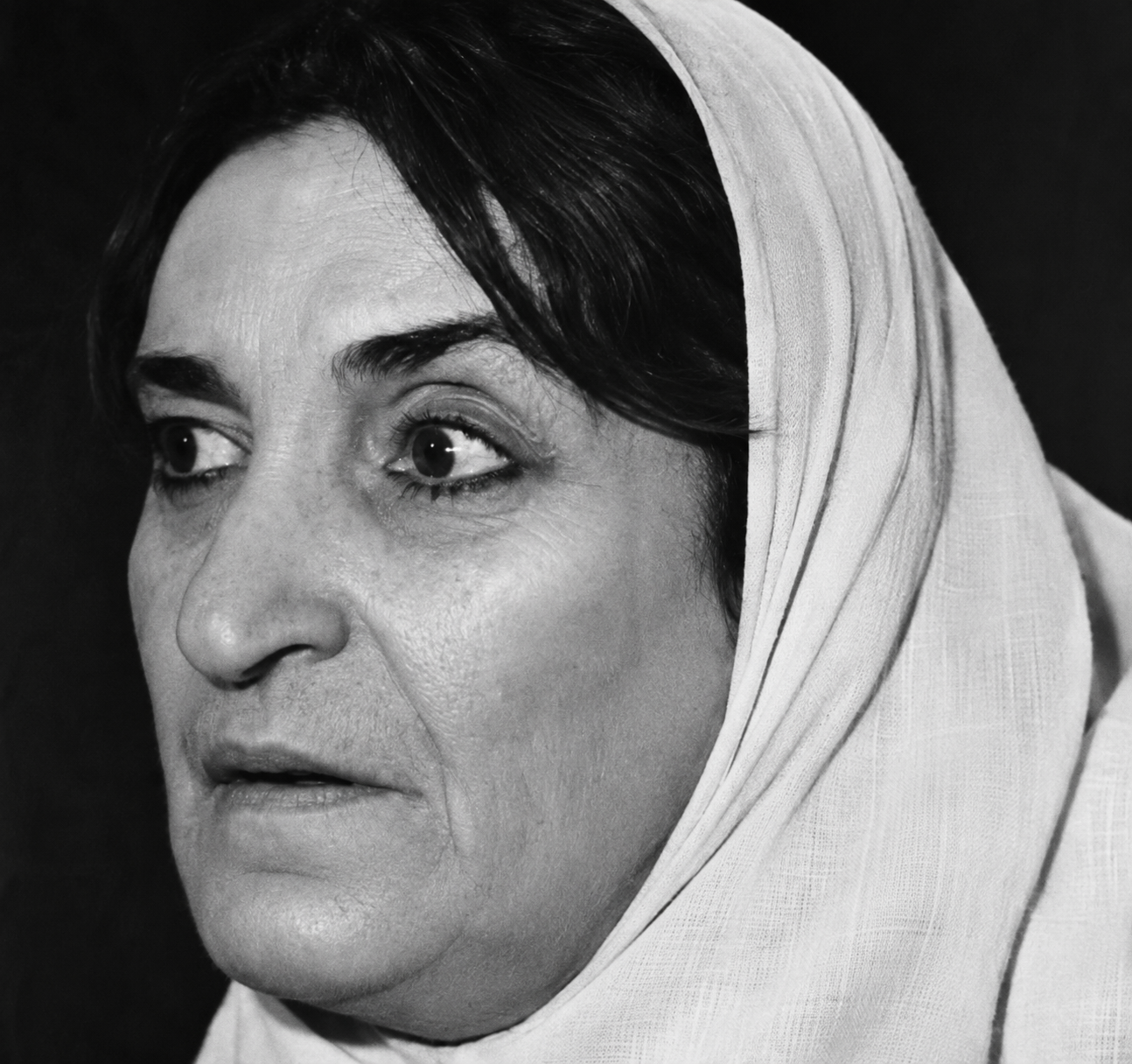
Esmat Safavi was one of the women whose names are associated with one of the most important chapters in the history of contemporary Iranian theatre: the emergence and expansion of women’s professional presence on stage. She belonged to a generation that needed not only talent and passion but also great courage and perseverance to enter the world of theatre—a generation whose presence gradually changed society’s perception of women as performers.
Esmat Safavi was born in Tehran in 1902. She was among the first women to receive professional acting training. She studied in classes taught by Ali Daryabeygi and later became one of the first graduates of Tehran’s School of Acting.
To understand the significance of her work, we must consider the social and artistic environment of Iran at that time. Before women became widely involved in theatre, female characters were often portrayed by male actors. Therefore, the appearance of an actual woman playing a female role on stage was not merely an artistic event; it represented a shift in society’s attitudes toward women’s participation in the arts.
Following the compulsory unveiling policy introduced in 1936, the conditions governing women’s participation in public life changed. However, these changes did not mean that social and cultural barriers had disappeared. Families, traditional social attitudes, and even the professional theatre environment continued to impose restrictions on women. Under such circumstances, entering the acting profession and continuing to work in it was neither simple nor free of difficulties.
Esmat Safavi began her professional career in 1937, performing in Salome at the Tehran Circus venue. From then on, the theatre stage became an important part of her artistic life. Through her continuous participation in productions and collaborations with theatre companies, she established her position in the theatre of her time.
Her artistic career included numerous productions, among them The Stick-Wielders of Varazil, The Wandering Nightingale, Nader Shah, Agha Mohammad Khan Qajar, The Foxes, and The Khan Dances. She also worked with the National Theatre Company led by Abbas Javanmard, a group that played an important role in the development and transformation of modern Iranian theatre.
Esmat Safavi’s significance must be understood in the context of her time. She entered theatre during a period when the presence of women on stage was still considered new, and sometimes unconventional, by parts of society. Imagine Tehran in those years: Lalehzar Street, newly established theatres, and audiences gradually encountering a different form of theatrical performance. In such an environment, a woman had to find the courage to receive training, rehearse, perform on stage, and earn recognition for her professional work.
Of course, Esmat Safavi was not the only pioneering woman on this path. Artists such as Roghayeh Chehreh-Azad, Loreta, and Iran Daftari also played important roles in establishing and strengthening women’s presence in Iranian theatre. The efforts of this generation laid the groundwork for the broader participation of female actors in the years that followed.
Today, seeing a woman in the leading role of a play or as the star of a theatrical production may seem entirely natural. Yet this sense of normality is the result of years of effort by women who took the first steps before later generations. Esmat Safavi was one of those women—an artist who, by remaining in the profession and continuing her work, contributed to the gradual transformation of women’s position in theatre.
Her artistic career was not limited to theatre. She also entered cinema in the 1950s, appearing in films such as The Cow, Downpour, The Postman, and The Stranger and the Fog. Her appearances in film and television demonstrate that her artistic activities continued over the years and that she was able to extend her experience from the theatre stage into other areas of acting.
In 1975, while performing in the television series Samak-e Ayyar, Esmat Safavi suffered a heart-related illness and passed away that same year.
Today, the names of some of Iran’s theatrical pioneers may be heard less frequently than those of artists from later generations, but the history of theatre cannot be complete without recognizing them. The significance of these artists lies not only in the fact that they were among the first women to appear on stage, but also in how their professional work created new possibilities for future generations.
Esmat Safavi was one of the women who demonstrated that the theatre stage was not a place reserved solely for men and that women’s presence was an inseparable part of the identity of the performing arts. She devoted nearly four decades of her life to art, spending a significant part of her years in a profession that still faced numerous obstacles when she first entered it.
Esmat Safavi: an actress who, by taking her place on stage, helped bring down some of the old barriers.