Sometimes silence speaks louder than words. Perhaps theatre begins precisely where words come to an end; where images, movement, light, music, and silence themselves become a language of expression.
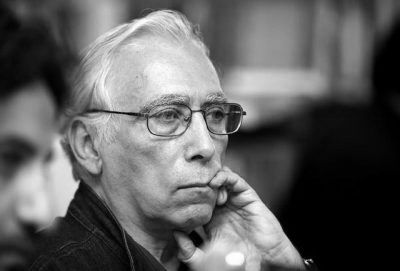
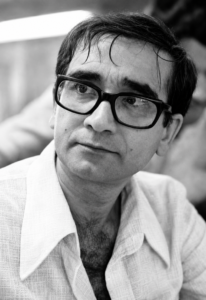
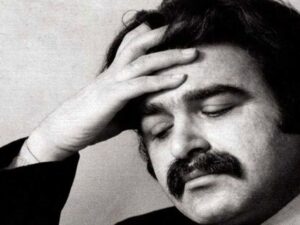
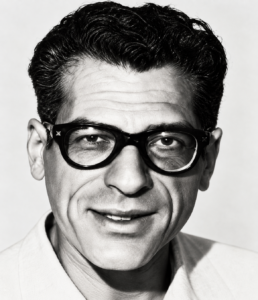
In the history of contemporary Iranian theatre, there have been artists who did more than stage plays; they changed the way we understand theatre itself. Arby Ovanessian is one of these artists, a director who saw theatre as something beyond the telling of a story and believed that the stage should create a new and independent world of its own.
Arby Ovanessian was born in 1942 in Isfahan into an Armenian family. His interest in literature, painting, and theatre began in his youth. He travelled to Europe to explore modern approaches to the performing arts and pursued studies in theatre, stage and costume design, and cinema in London and the United States. These experiences later played an important role in shaping his distinctive artistic language and modern approach to directing.
Ovanessian came to believe that a director is not merely someone who stages a dramatic text, but someone who must create an entirely new world from within it. For this reason, in his productions, mise-en-scène, lighting, silence, the distance between actors, music, and even the way an actor moved or breathed were all part of the language of performance.
During the 1970s, Arby Ovanessian became one of the important figures of the Theatre Workshop, an institution that played a significant role in the emergence and development of Iranian avant-garde theatre. By staging works by distinguished playwrights such as Samuel Beckett, Eugène Ionesco, Jean Genet, and Peter Handke, he introduced Iranian audiences to a different form of theatre, one in which form, imagery, and visual experience were as important as text and story.
One of the significant events in his artistic career was his production of The Cherry Orchard, directed by Ovanessian, which coincided with the opening of Tehran’s City Theatre complex. His production of Abbas Nalbandian’s play A Profound, Magnificent and New Research into the Fossils of the Twenty-Fifth Geological Era, or the Fourteenth, Twentieth, and So On; It Makes No Difference also received major awards, including the first prize at the Shiraz Arts Festival and an award from National Iranian Television.
Parviz Pourhosseini, an actor who collaborated with Ovanessian on several productions as well as the film The Spring, recalled his first experience of watching Ovanessian’s work through a production of August Strindberg’s Miss Julie. He described its stage design and direction as particularly impressive.
One of the defining characteristics of Ovanessian’s work was his precision and meticulous approach to rehearsals. Accounts from his colleagues reveal that he paid extraordinary attention to detail in directing. Sometimes even a small movement by an actor had to be repeated many times until it achieved exactly the form he envisioned. In his view, theatre was an art of precision, and details that audiences might not consciously notice could nevertheless have a profound effect on their emotions and understanding.
Ovanessian consistently sought to establish a connection between Iranian culture and modern developments in world theatre. For him, form was as important as content, and staging a play was not simply a matter of conveying a story; it was an opportunity to discover new ways of seeing and experiencing. For this reason, his productions and theatrical experiments remain valuable subjects of study for theatre students and researchers.
In addition to his work in theatre, Arby Ovanessian also explored cinema and directed two films: The Spring, made in Iran, and How My Mother’s Embroidered Apron Unfolds in My Life, made in France.
Following the 1979 Iranian Revolution, like a number of artists of his generation, he left Iran and spent many years living, working, and teaching abroad. During the 1990s, he returned to Iran, but his return did not last long, and after some time he went back to France.
Perhaps Arby Ovanessian’s most important legacy is his way of looking at theatre; a perspective that reminds us that actors and spoken words are not the only elements that create a narrative on stage. Sometimes silence, the distance between two actors, the movement of a hand, or a change in lighting can convey a meaning that hundreds of words cannot express.
Arby Ovanessian is among those artists whose influence cannot be measured solely by the number of productions they have staged or the awards they have received. His importance lies in transforming the language of theatrical performance in Iran and opening new horizons in directing and stage experimentation.
We dedicate this programme to Arby Ovanessian, an artist who taught us that sometimes, to hear a story, we must listen to silence, and to truly see theatre, we must learn to look differently.